Learning Through Discovery, Experience, and Purpose
At Burnaby Montessori School, we believe children learn best when they are actively involved in their own learning.
Our Montessori classrooms are carefully prepared with hands-on materials and purposeful activities that invite children to explore, practice, discover, and understand. Each area of the classroom has a specific purpose, while working together to support the development of the whole child.
Through the Montessori curriculum, children build important academic foundations while also developing independence, concentration, coordination, confidence, problem-solving skills, and positive relationships with others.
Our curriculum includes Practical Life, Sensorial, Language, Mathematics, Cultural Studies, Art, Music and Movement, Physical Activities, and opportunities to learn beyond the classroom.
PRACTICAL LIFE
BUILDING INDEPENDENCE THROUGH EVERYDAY EXPERIENCES
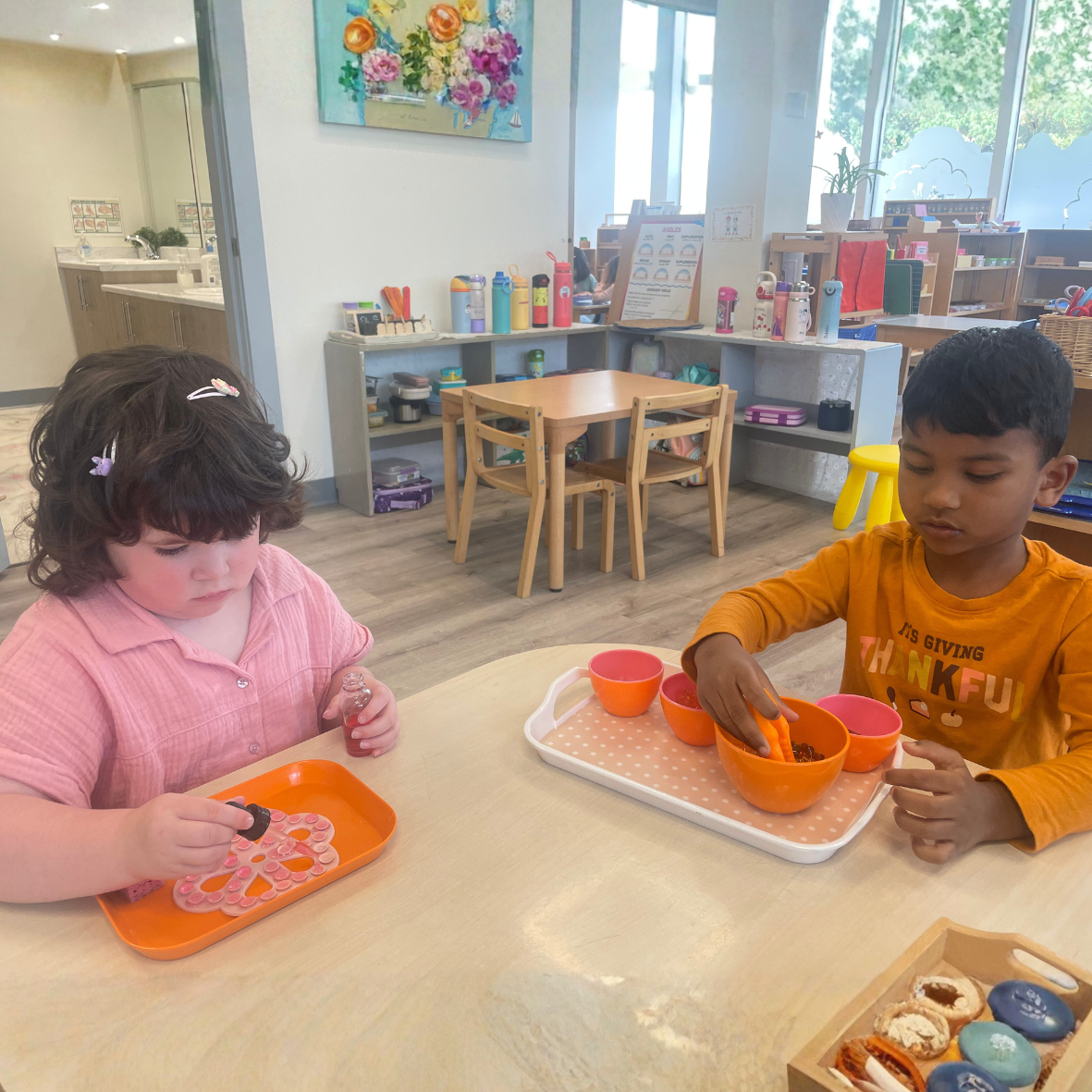
Practical Life activities are an important part of the Montessori classroom. They help children develop the skills they need to become increasingly independent and confident in their everyday lives.
Children participate in purposeful activities such as pouring, transferring, sorting, cleaning, organizing, caring for their classroom environment, and taking care of themselves.
While these activities may look simple, they help children develop concentration, coordination, order, responsibility, and independence.
As children experience success in doing things for themselves, they begin to understand, “I can do it.”
SENSORIAL
UNDERSTANDING THE WORLD THROUGH THE SENSES
Young children learn about the world by using their senses.
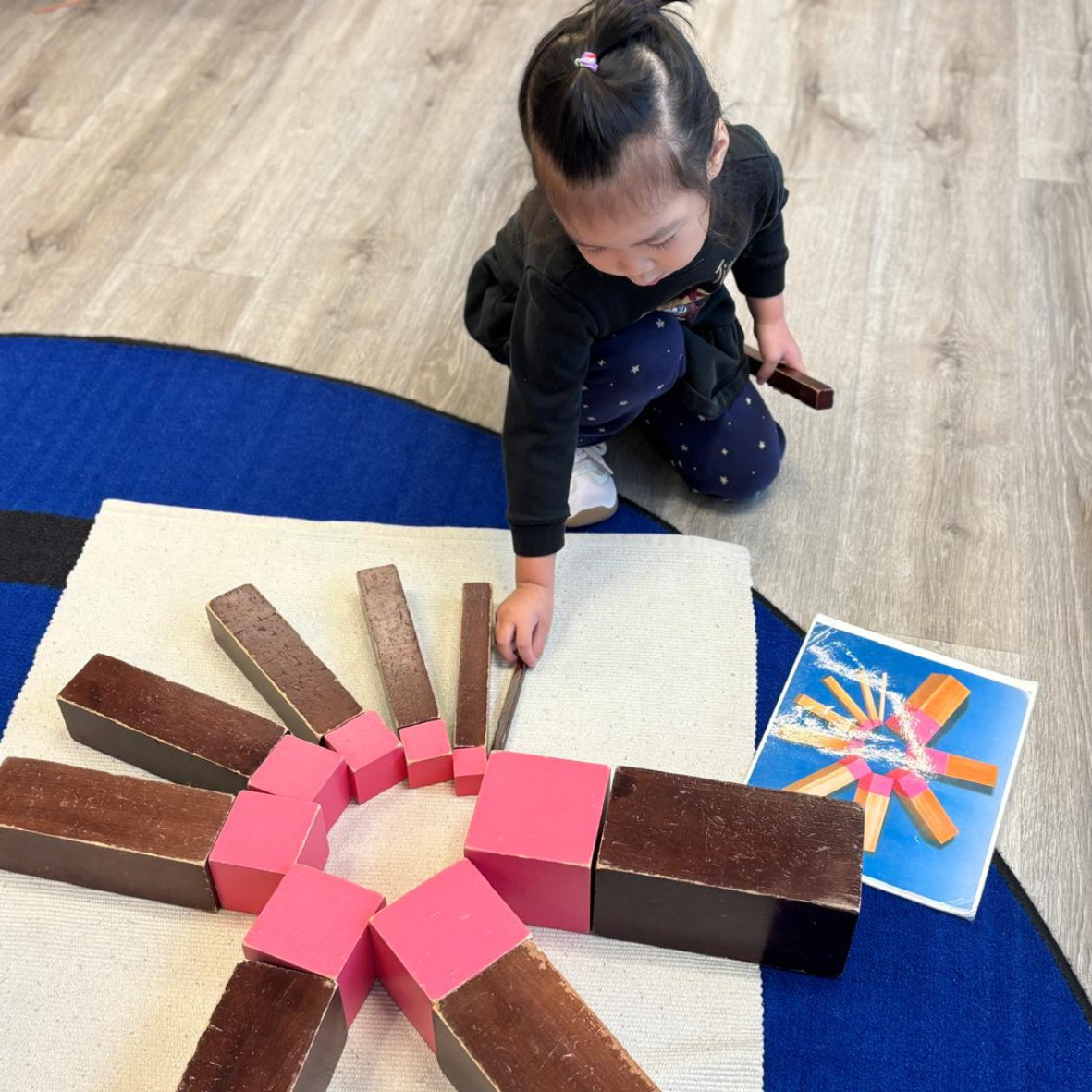
The Montessori Sensorial materials give children opportunities to explore and refine their ability to observe differences in size, shape, colour, texture, sound, weight, and other qualities.
Through hands-on exploration, children learn to compare, classify, organize, and make sense of what they experience.
Sensorial activities also prepare children for more complex learning by developing concentration, observation, coordination, and an understanding of patterns and relationships.
BUILDING THE FOUNDATIONS FOR COMMUNICATION AND LITERACY
Language is an essential part of a child’s development and provides the foundation for communication, reading, writing, and future academic learning.
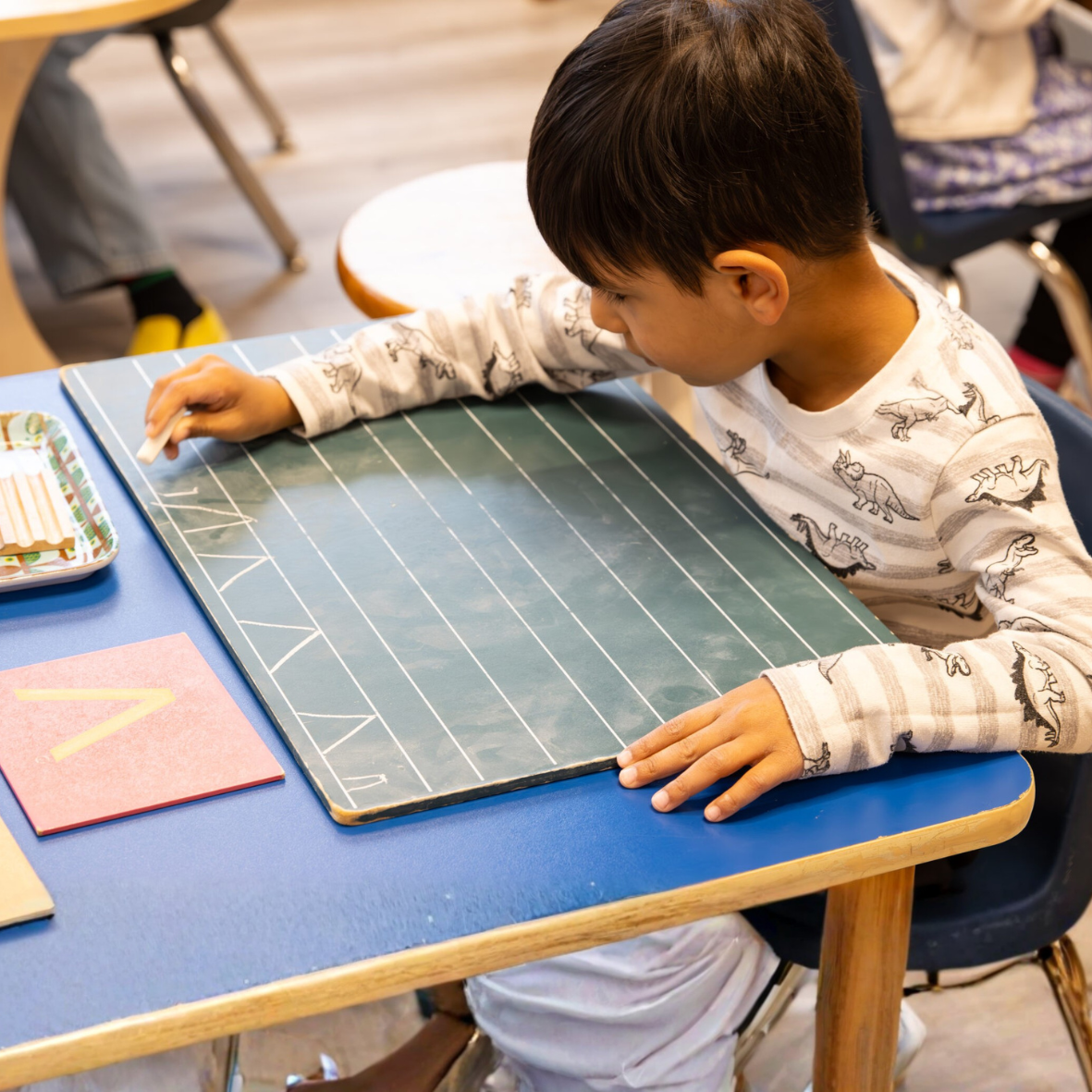
Our Montessori language activities encourage children to develop their vocabulary, listening skills, verbal communication, phonetic awareness, reading, and writing.
Children are introduced to language through hands-on experiences that make learning meaningful and engaging. As they progress, they build from sounds and letters toward words, sentences, reading comprehension, and written expression.
We want children to discover that language is not simply something they learn—it is a way to express their ideas, understand others, and connect with the world around them.
MATHEMATICS
FROM HANDS-ON DISCOVERY TO MATHEMATICAL THINKING
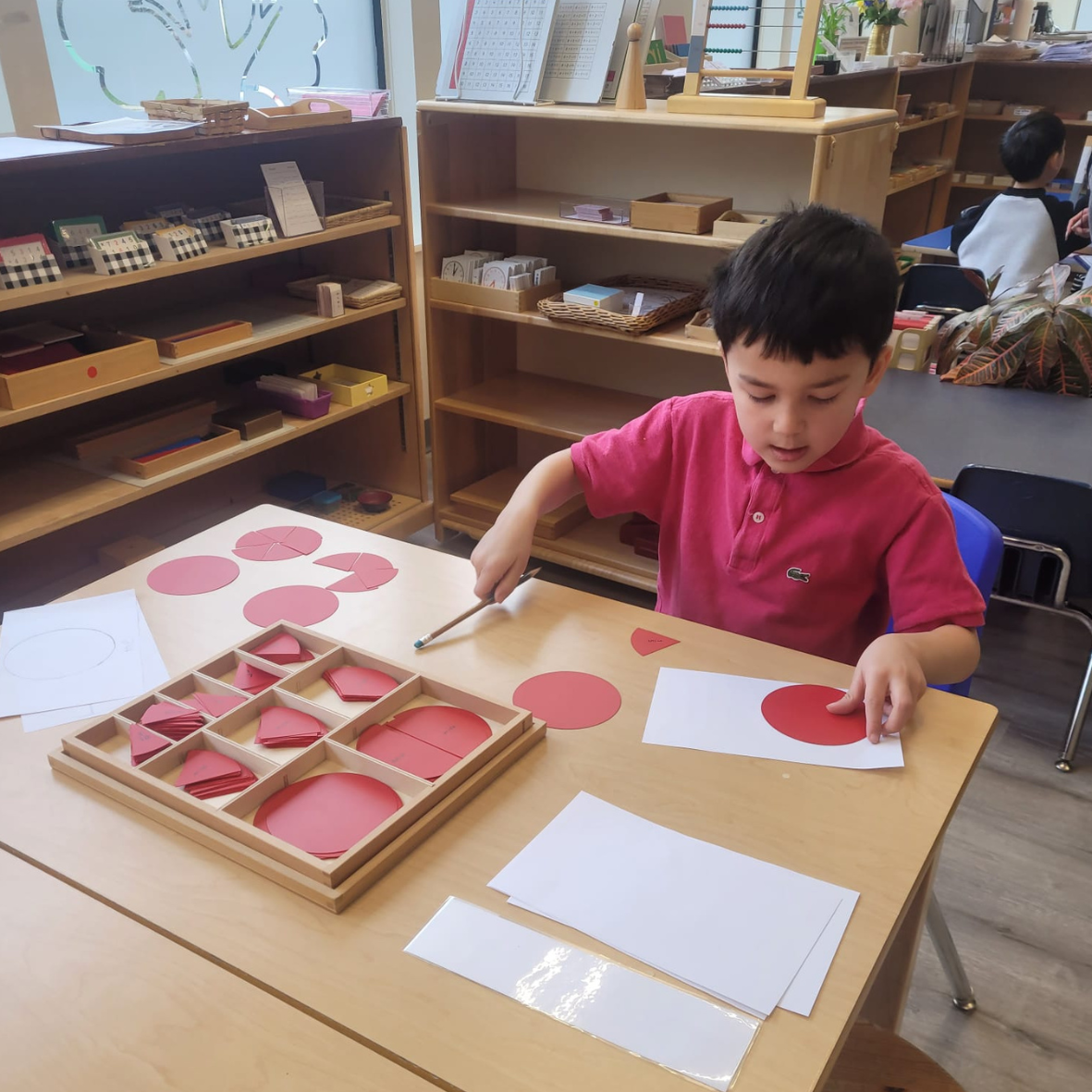
Montessori mathematics begins with concrete, hands-on experiences.
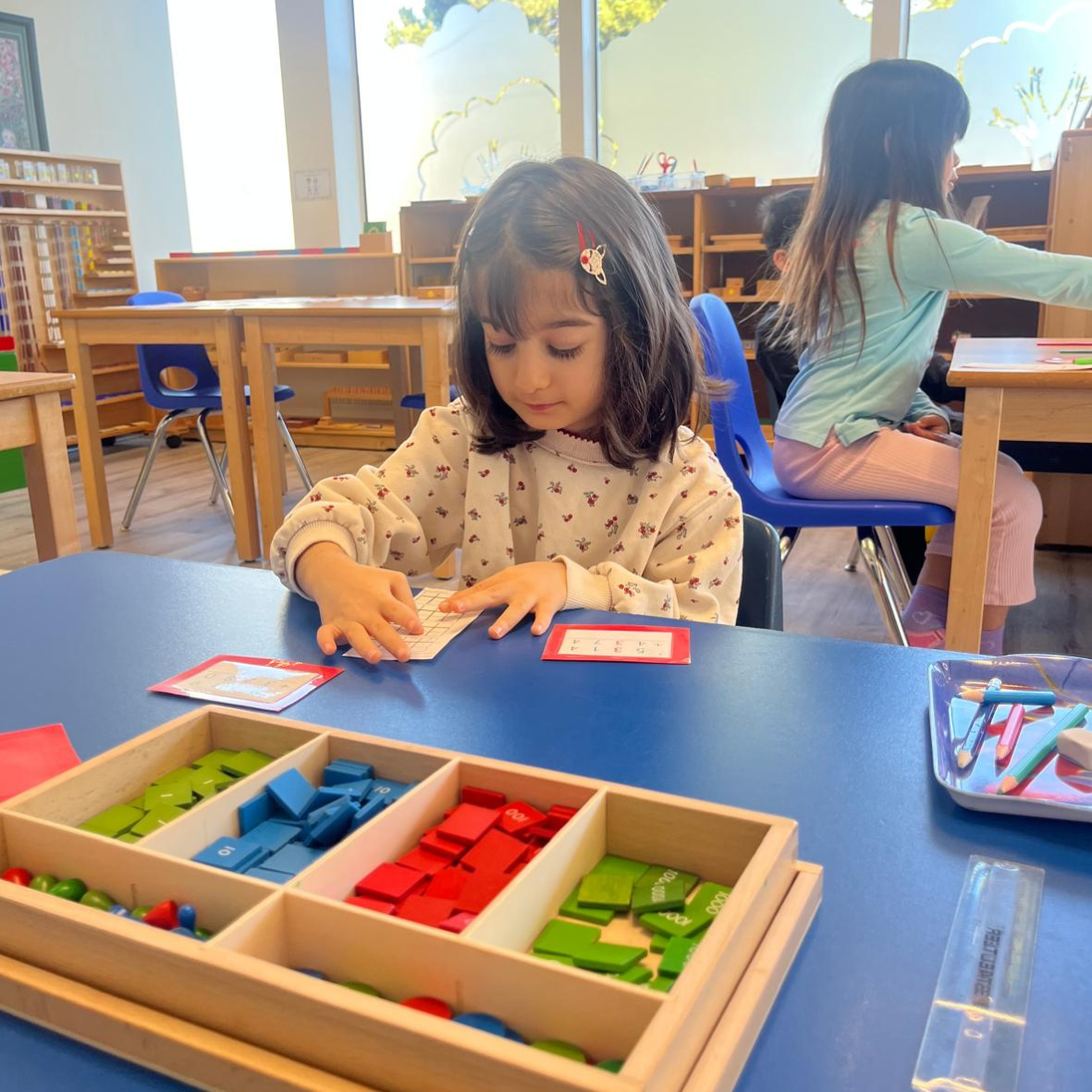
Children use carefully designed Montessori materials to explore numbers, quantities, counting, patterns, relationships, and mathematical operations. By working with concrete materials first, children develop an understanding of mathematical concepts before gradually moving toward more abstract thinking.
As their understanding develops, children build confidence in working with numbers and begin to recognize mathematics as something they can explore, understand, and use.
CHILDREN DEVELOP:
Number Sense · Counting · Problem-Solving · Logical Thinking · Mathematical Reasoning
Our goal is not simply to help children learn mathematical facts, but to help them understand how and why mathematics works.
CULTURAL STUDIES
DISCOVERING THE WORLD AROUND US
Children are naturally curious about the world.
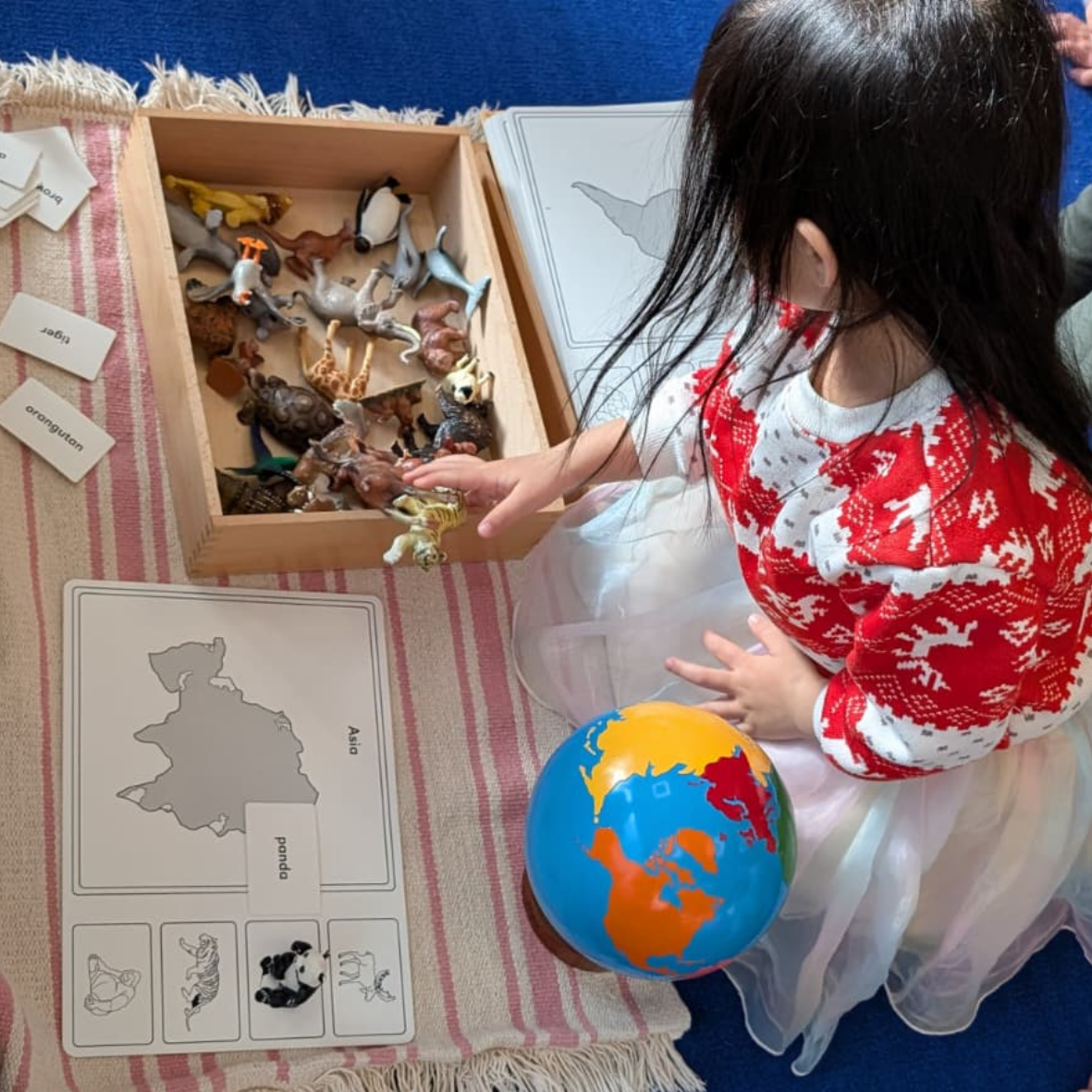
Our Cultural Studies curriculum gives children opportunities to explore geography, science, nature, history, and different people and cultures.
Through hands-on materials, classroom activities, stories, discussions, and experiences, children begin to develop an understanding of the world beyond their immediate surroundings.
They learn to observe, ask questions, make connections, and appreciate the many different people, places, and environments that make up our world.
CHILDREN DEVELOP:
Curiosity · Observation · Knowledge · Cultural Awareness · Appreciation for the World
We encourage children to see themselves as part of a larger community and to approach the world with wonder, respect, and curiosity.
ART
ENCOURAGING CREATIVITY AND SELF-EXPRESSION
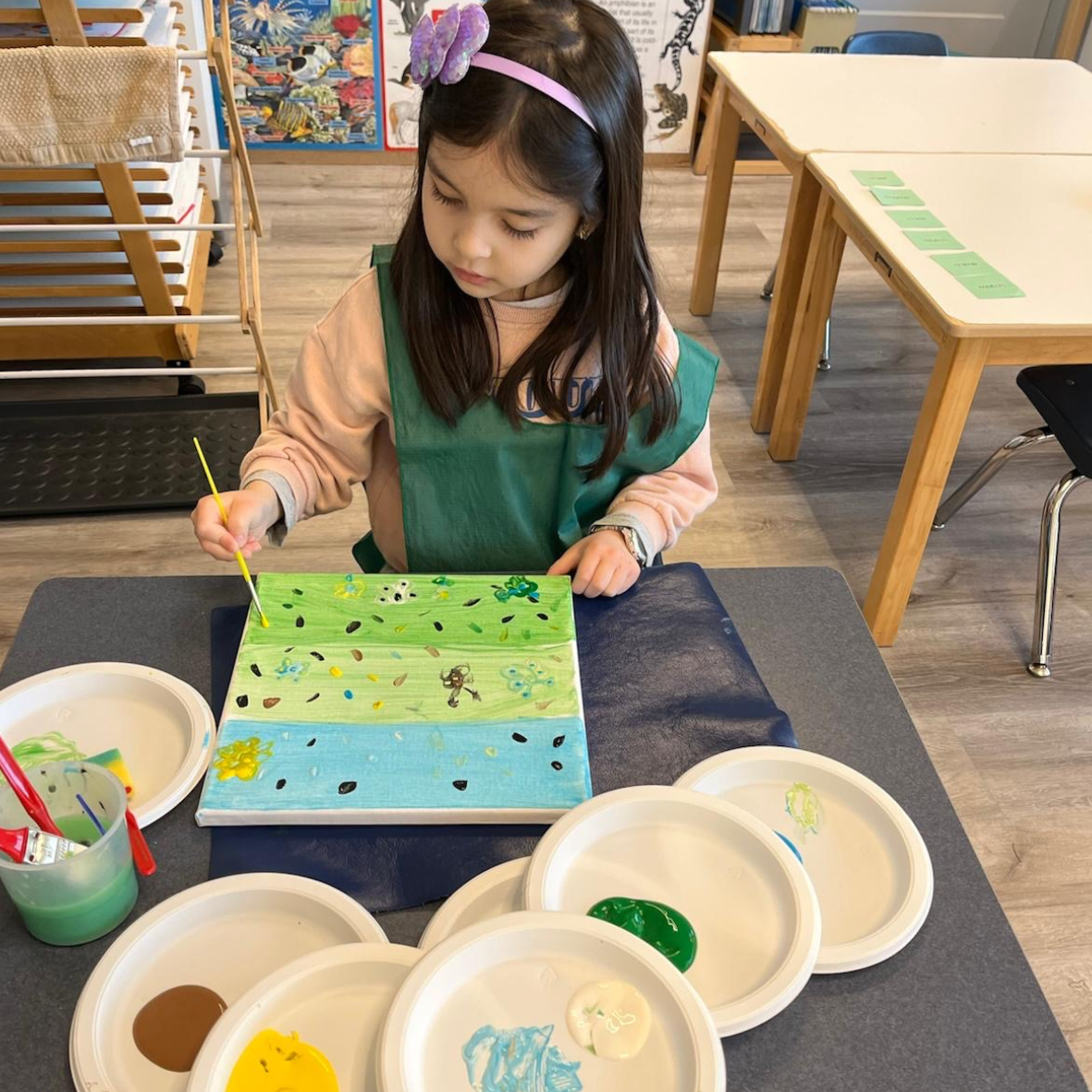
Art gives children an opportunity to explore their creativity and express themselves in their own unique ways.
Through drawing, painting, crafts, and other creative experiences, children explore colour, shape, texture, materials, and different ways of expressing their ideas.
Art also provides opportunities for children to make choices, experiment, concentrate, and develop fine motor skills.
CHILDREN DEVELOP:
Creativity · Self-Expression · Fine Motor Skills · Concentration · Confidence
We value the process of creating, not simply the finished product.
MUSIC & MOVEMENT
LEARNING THROUGH RHYTHM, SOUND, AND EXPRESSION
Music and movement are an important part of a child’s development.
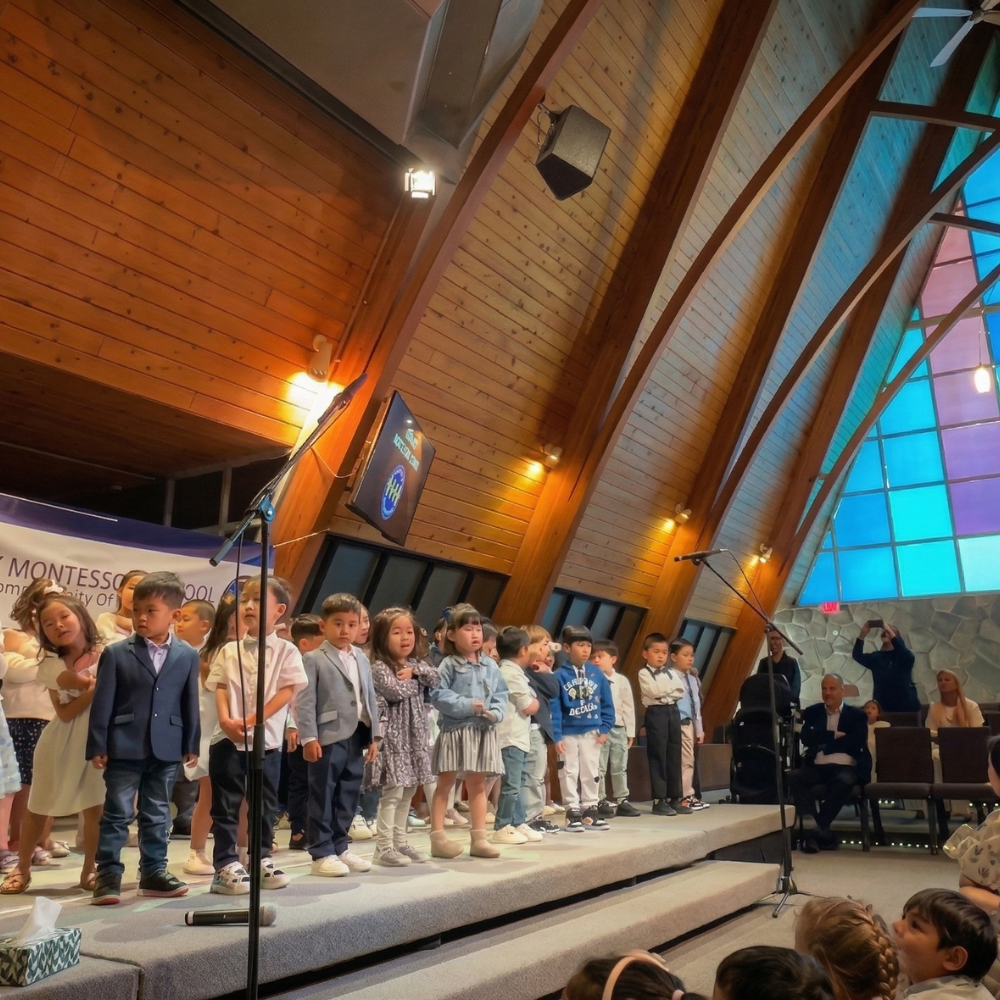
Children are introduced to rhythm, songs, music, movement, and opportunities for creative expression. These experiences encourage children to listen, participate, coordinate their movements, and express themselves.
Music and movement can also support language development, memory, social interaction, coordination, and confidence.
Most importantly, children experience the joy of moving, creating, and participating together.
PHYSICAL ACTIVITIES
DEVELOPING HEALTHY BODIES AND ACTIVE MINDS
Physical activity supports children’s physical, social, and emotional development.
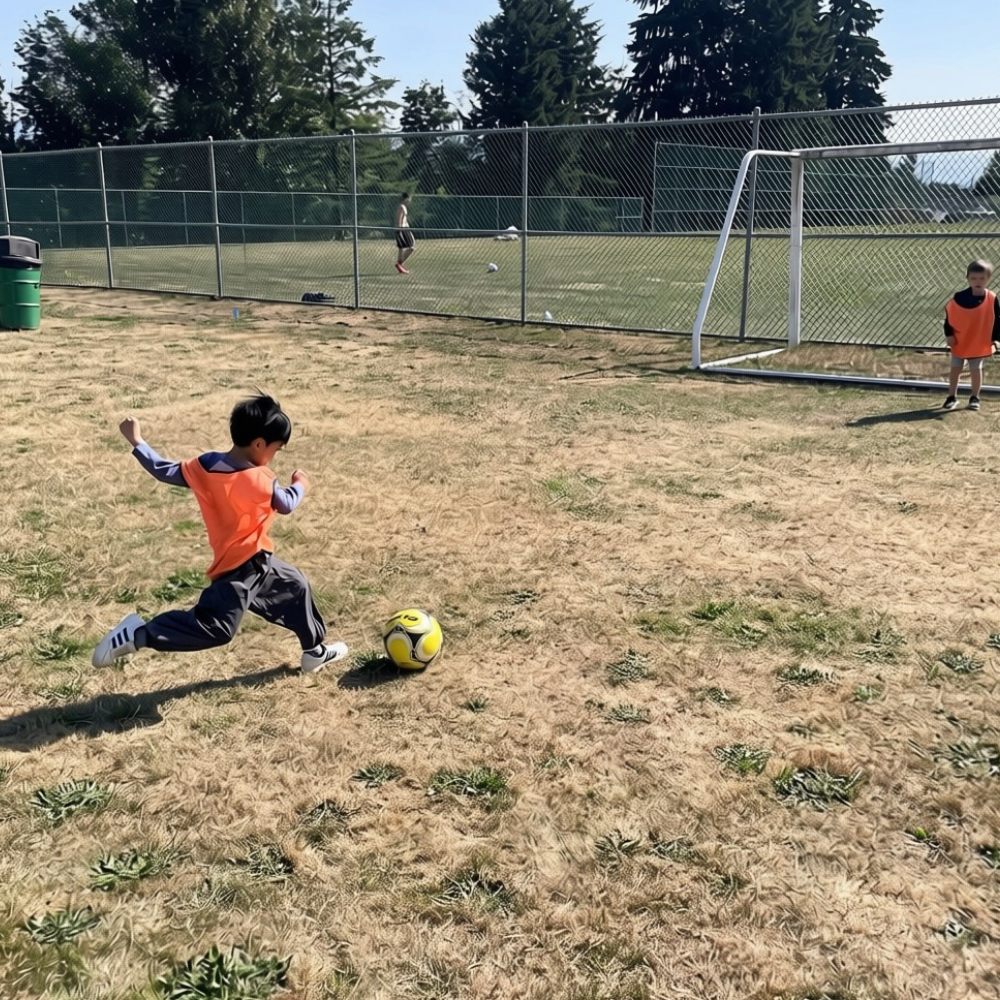
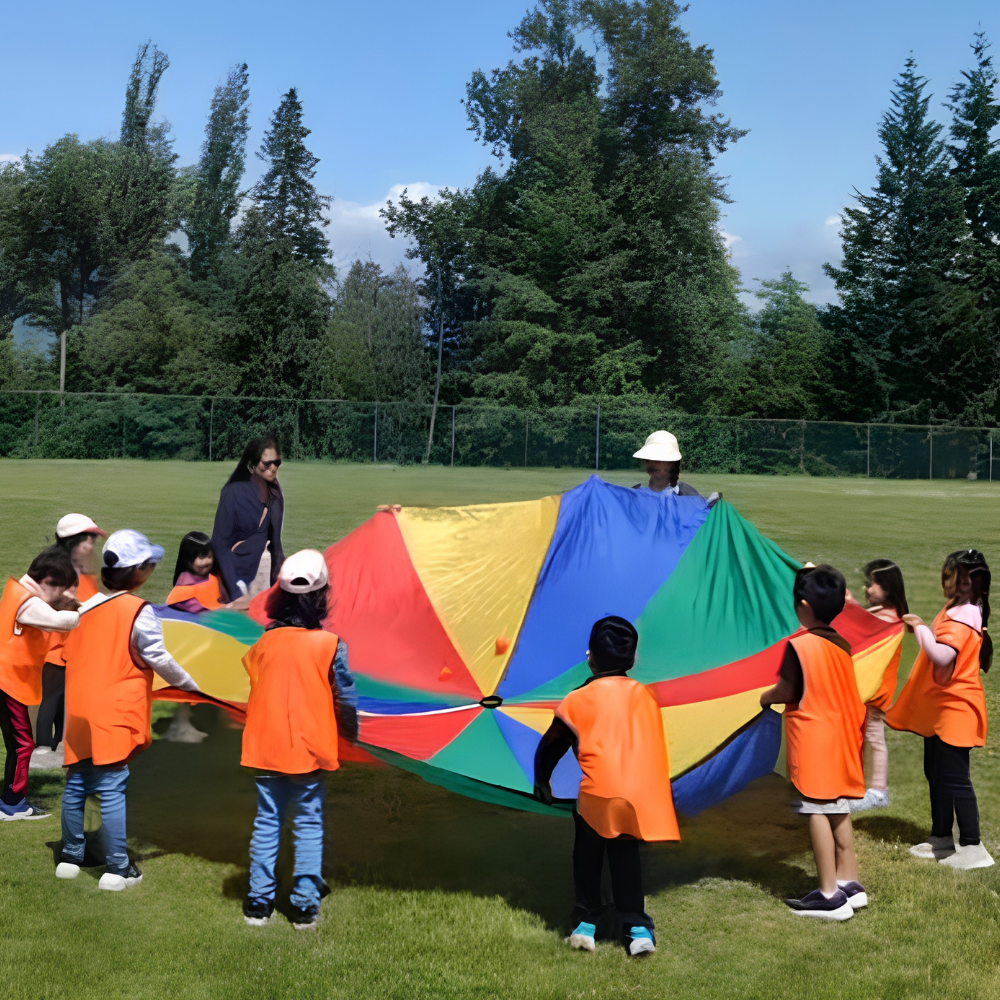
Our children are given opportunities to move, play, develop coordination, and participate in age-appropriate physical activities.
These experiences help children develop balance, gross motor skills, body awareness, and confidence in their physical abilities.
Physical activity also provides opportunities for children to practice cooperation, taking turns, following directions, and participating as part of a group.
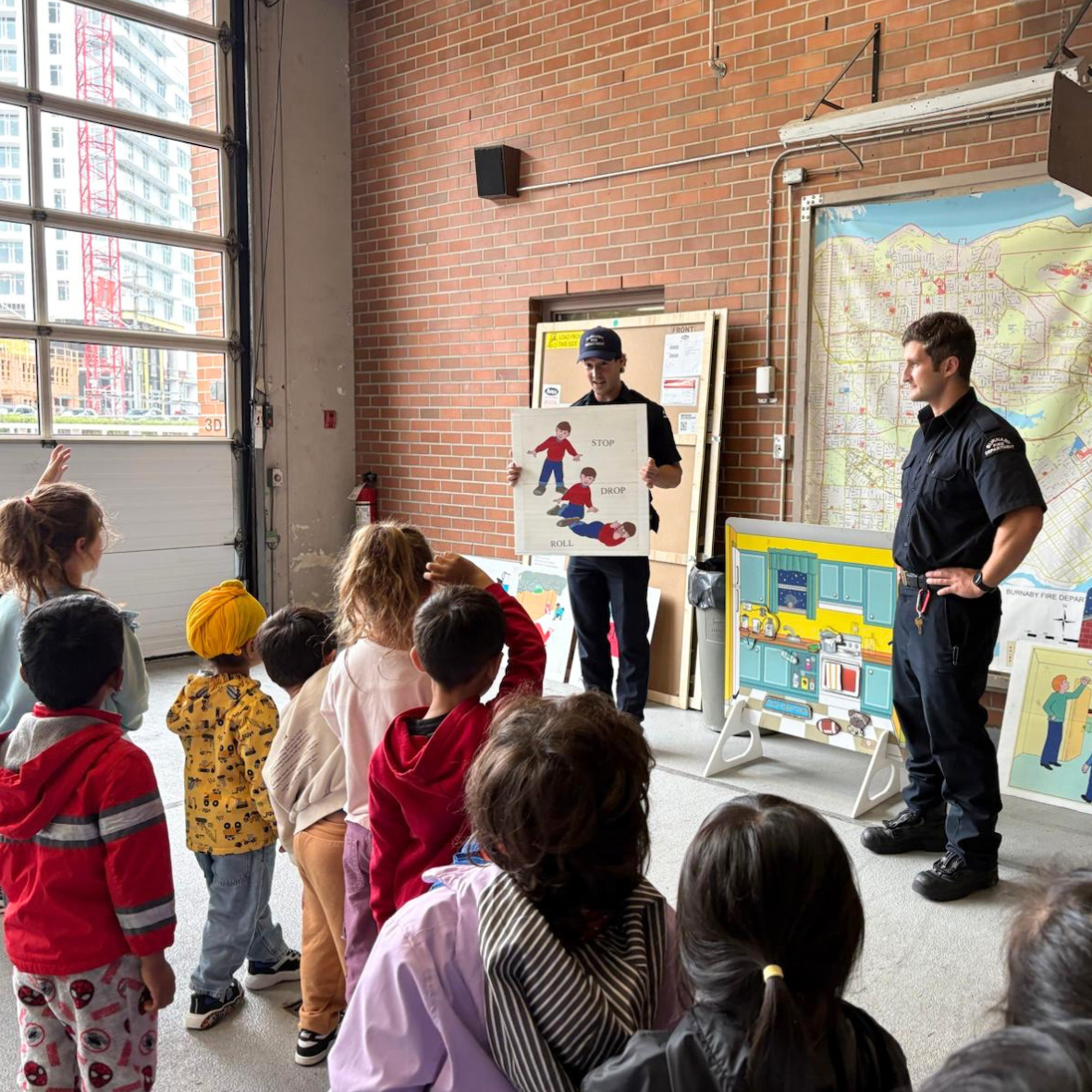
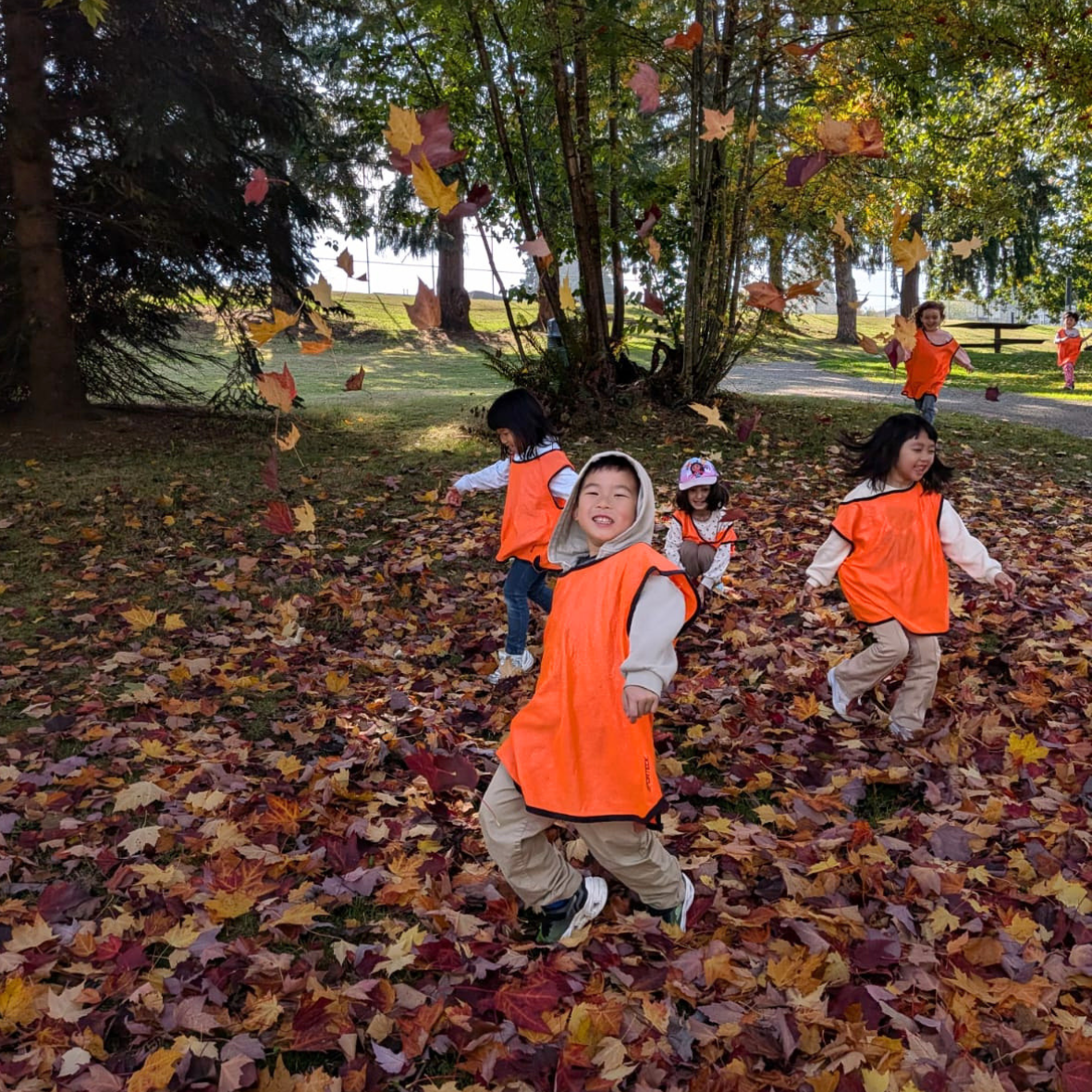
Outdoor experiences, group activities, and field trips provide children with opportunities to connect what they learn in the classroom with the world around them.
These experiences allow children to observe, explore, ask questions, and experience new environments.
Field trips and outdoor activities also encourage children to develop social skills, independence, adaptability, and an appreciation for their community and natural surroundings.
LEARNING BECOMES SOMETHING CHILDREN CAN:
See · Experience · Explore · Question · Understand
DEVELOPING THE WHOLE CHILD
ACADEMIC LEARNING IS ONLY PART OF THE JOURNEY
At Burnaby Montessori School, we believe children are most prepared to learn when their social, emotional, and academic development are supported together.
Throughout the Montessori environment, children have opportunities to develop:
CONFIDENCE
Children experience success through meaningful, achievable challenges.
INDEPENDENCE
Children are encouraged to take responsibility for themselves, their work, and their environment.
CONCENTRATION
Children are given the time and space to become deeply engaged in meaningful activities.
SOCIAL SKILLS
Children learn to communicate, cooperate, take turns, and respect others.
PROBLEM-SOLVING
Children are encouraged to think through challenges and discover solutions.
EMOTIONAL DEVELOPMENT
Children are supported as they develop self-awareness, resilience, and confidence in managing new experiences.
These skills provide an important foundation for academic learning and help children become increasingly confident and capable learners.
THE MONTESSORI CLASSROOM
A CAREFULLY PREPARED ENVIRONMENT FOR LEARNING
Every Montessori classroom is designed with purpose.
Materials are organized so that children can access them independently, choose meaningful activities, and work at their own pace.
Teachers observe each child, introduce materials when they are ready, and provide guidance that responds to their individual development.
This creates a classroom where children are not simply waiting for the teacher to tell them what to do.
They are actively involved in their own learning.
PREPARING CHILDREN FOR WHAT COMES NEXT
The skills children develop through the Montessori curriculum extend far beyond their time at BMS.
As children progress through our programs, they build stronger academic foundations while becoming increasingly independent, confident, organized, and engaged in their learning.
Our goal is to help children develop the knowledge, skills, confidence, and positive attitude toward learning they need to approach Kindergarten and the next stages of their educational journey with confidence.
BUILDING STRONG FOUNDATIONS TODAY. PREPARING CONFIDENT LEARNERS FOR TOMORROW.
Get in touch with us!
Reach out to us today!
Located in the Metrotown area of Burnaby B.C., Burnaby Montessori School (BMS) is a fully accredited learning institution licensed with both Fraser Health and the Independent School Branch.
Office Hours: Monday to Thursday 8:00am to 4:00pm
Located in the Metrotown area of Burnaby B.C., Burnaby Montessori School (BMS) is a fully accredited learning institution licensed with both Fraser Health and the Independent School Branch.